The boom or glut in streaming documentaries has sparked a reckoning among filmmakers and their subjects.
Save this article to read it later.
Find this story in your accountsSaved for Latersection.
But as Netflix and other streamers battled for market share, documentaries themselves began to change.
A genre that had always existed in part to inform and enlighten was now primarily a commercial product.
This past May, A24 added Documentary to its line offilm-genre scented candles, alongside Horror and Rom-Com.
That meant ramping up.
The company now has dozens of full-time employees and more than 200 freelancers.
In December,Story Syndicatereleased one of the most-watched documentaries ever:Harry & Meghan.
Once something looks commercial, thats all people want it to be.
When I put this assessment to a former Netflix executive, they didnt dispute it.
A lot of documentaries I would say the majority of documentaries dont meet that bar.
Hollywood is now showing signs of retrenching.
Documentary-making has never been ethically pure or entirely subjective.
Nanooks real name was Allakariallak.
His wife in the film wasnt his wife.
(She was, according to another local, one of Flahertys multiple wives.)
The streaming era introduced new pressure points into the filmmaking process.
Some editors say they no longer even have time to watch all the footage they have.
When you get more money, you want more of a guarantee that youre gonna get the thing.
Several documentarians told me they had grown wary of working with any production company from Los Angeles.
Plenty of thoughtful, interesting, and moving documentaries are still being made.
But the streaming rush primarily directed resources toward safe bets that could be delivered quickly.
If a series worked, likeTiger King,it could get renewed to continue the story.
According to a person who worked onThe Jinx,director Andrew Jarecki is currently working on a sequel.
Should journalists be walling off people who are of public interest from other journalists?
The most popular and often most formulaic genre of all was true crime.
The productions could be thoughtful, but that wasnt necessarily the streamers first priority.
Im getting, Did anybody murder your sister, and do you want to make a film about that?
The documentary world embraced these companies cautiously.
(The Hollywood ReportercalledXTRs festival partiesintimidatingly hip.)
I woke up in a cold sweat and said, We have to buy this.
Mooser said the company had already financed or co-financed more than 90 projects.
Mooser believed that, to survive, documentary companies had to learn how to play Hollywoods game.
Vice issued its own press release a few hours later.
Both companies say they may have their films out by the spring.
By the time we met, Mooser was already shifting his pitch like a proper start-up founder.
The service would in theory allow XTR to circumvent the streamers and distribute films on its own.
(Garbuss first Oscar nomination was for a film about Angola, the notorious Louisiana prison.)
Whats wrong with wanting to watch Elton John?
But its not really a documentary.
Some of the most notable celebrity documentaries were successful because the famous people had given up control.
We pushed our way in and convinced them to let us film, Berlinger told me recently.
We let them know, If you dont want to make the film, well pack up and leave.
And I think that does a disservice to the audience.
He pointed out that the film connected Metallica to people who didnt care about the band at all.
Well, is there a larger story?
Are you gonna open yourself up?
Oh, well, theyre not gonna talk about that or this.
And yet control is what many artists want.
He says another filmmaker eventually took on the project.
But the race for sources was making it harder to compete.
A breakout character in a documentary could become a marketable star in their own right.
It is now available on HBO Max.
The agent was representing a production company pursuing a documentary on the topic.
I hear youre talking to our talent, the agent said.
you better back off.
The agent paused, then said, Semantics.
She once walked up to a watercooler at work to find her colleagues talking about it.
(HBO Max adapted the documentary into a fictionalized series with Ratliff played by Sophie Turner.)
Id like to be stripped fromThe Staircase, Ratliff says.
Subjects co-directors, Jennifer Tiexiera and Camilla Hall, were pitching the film as Super Size Mefor documentaries.
Ratliff, for instance, had the filmmakers remove crime-scene photos of her mothers death.
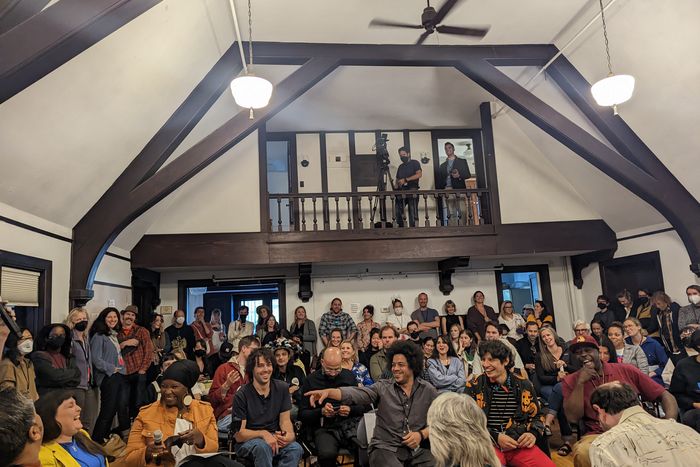
The town hall was hosted by Dr. Kameelah Rashad, a psychologist theSubjectdirectors had hired to support the participants.
Is another way, is another world, is another relationship possible?
Rashad asked the crowd.
Could they have manufactured some tension by staging confrontations between the participants and the directors of their original films?
Doing so would have felt like the very kind of storytelling they were trying to interrogate.
It also wasnt the best time to sell a documentary.
The corporate age was giving way to the consolidation age.
They wondered who would support smaller, more political films but those films had never been easy to make.
It was hard to know what audiences should make of all this.
And treating the subjects properly?
And telling the true story?
Thank you for subscribing and supporting our journalism.
